There are two ways for an individual to put hashrate to work on the Bitcoin network today: buy an ASIC miner and run it yourself, or rent hashrate from a cloud mining provider. Both can make sense. Both have real trade-offs. This guide puts them side by side, with numbers where numbers exist, so you can pick the one that fits your situation.
Key takeaways
- Home mining means you own the machine. You also own the upfront cost, the electricity bill, the noise, the heat and every repair.
- Cloud mining means you rent a share of machines that already run in a facility. No hardware, no setup and no power bill, but you do not own an asset you can resell.
- With either option, mining rewards depend on network difficulty, the block reward and the price of Bitcoin. Neither is guaranteed.
- The deciding factors are usually your electricity price, your space and your appetite for hands-on work.
Option 1: running an ASIC at home
An ASIC (application-specific integrated circuit) is a machine built to do one thing, compute Bitcoin's SHA-256 puzzle, as fast and efficiently as possible. If you have never seen one up close, our tour of an ASIC miner explains what is inside the box.
Take a current air-cooled flagship, the Bitmain Antminer S23, as a reference point:
- Hashrate of an Antminer S23
- 318 TH/s
- Hashrate of an Antminer S23
- Power draw, around the clock
- 3,498 W
- Power draw, around the clock
- Noise, close to a vacuum cleaner
- ~75 dB
- Noise, close to a vacuum cleaner
The upfront cost
At US retail, a new S23 sells for around $8,300 at the time of writing. Prices move with the Bitcoin market, and newer models arrive every year or two, which pushes the resale value of older ones down. A miner is a depreciating asset, closer to a car than to a gold bar.
The electricity bill
A machine drawing 3,498 W around the clock uses about 2,520 kWh every 30 days. At an average US residential rate of roughly 17 cents per kWh, that is about $430 per month, or roughly $5,200 a year, before the machine has paid for anything. Professional mining farms pay a fraction of residential rates, which is the main reason they exist.
Noise, heat and wiring
All the electricity an ASIC consumes ends up as heat, about as much as two or three space heaters running nonstop. The fans that move that heat out produce around 75 dB, which is not something you want in a bedroom, an office or, often, a shared building. Most flagship miners also need a dedicated 240 V circuit.
Maintenance and your time
Fans wear out, hash boards fail, firmware needs updates and pools need configuring. When a machine goes down at 3 a.m., nobody restarts it but you, and every hour offline is an hour of hashrate lost.
What you get in return
Ownership. The machine is yours, you choose your pool, and you can sell the hardware later, even if for less than you paid. For people with very cheap electricity, a garage or outbuilding to spare and a taste for tinkering, home mining can be a rewarding hobby.
Option 2: renting hashrate in the cloud
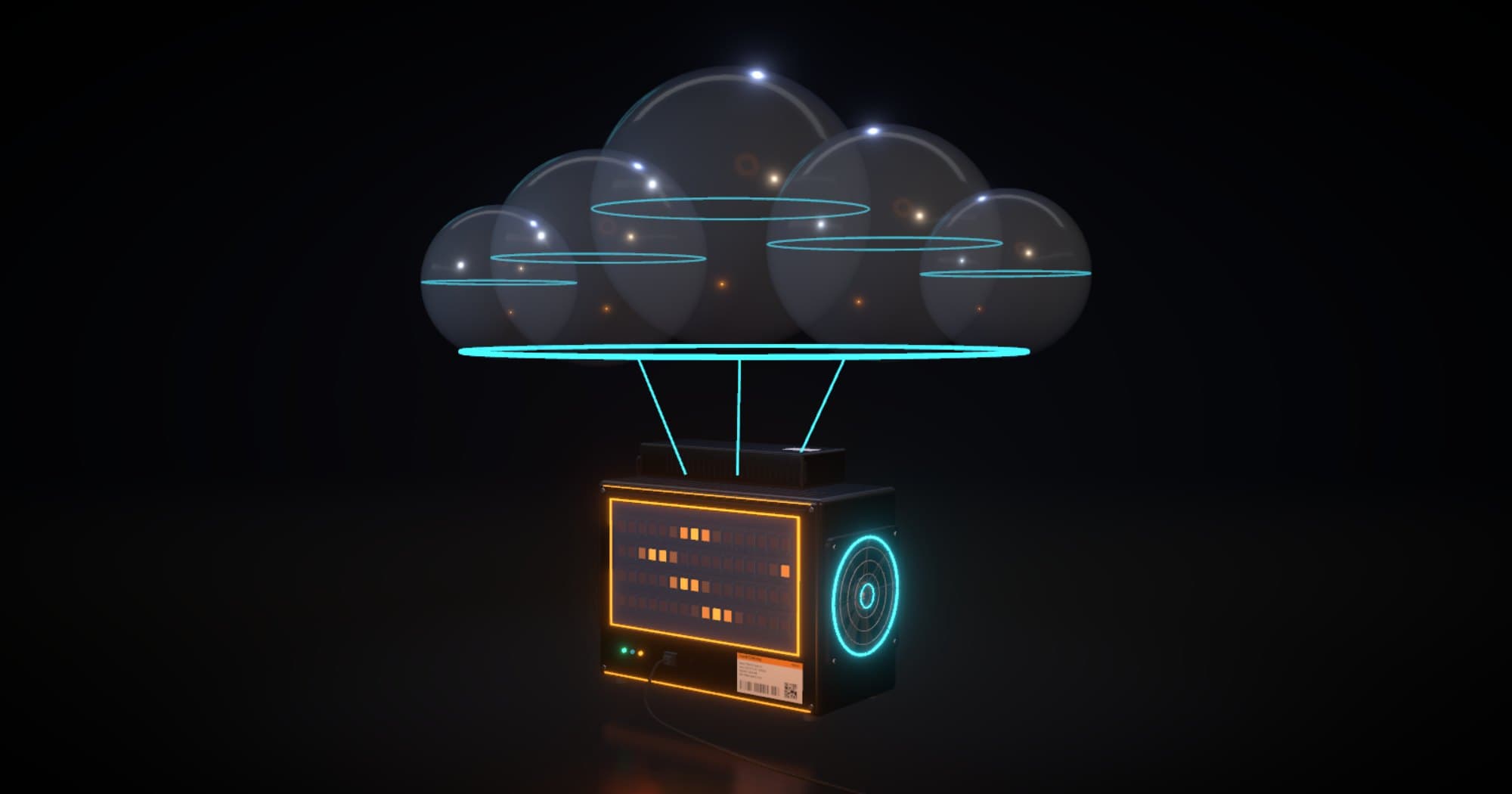
Cloud mining flips the model. Instead of buying a machine, you rent a slice of hashrate, measured in TH/s, from machines that are already installed in a facility with industrial power rates, cooling and on-site staff. The rewards that hashrate produces are credited to you.
What changes in practice:
- No upfront hardware cost. You pay for the hashrate you rent and the period you rent it for.
- No electricity bill at home. Power is included in the rental price.
- No noise, no heat, no wiring. Nothing is installed at your place.
- No maintenance. Repairs and uptime are the provider's job.
- Flexibility. You can start small and scale up or stop, instead of committing to one machine for years.
And what you give up:
- Ownership. You do not own hardware you could resell.
- Control. You rely on the provider to run the machines well and to pay out what your hashrate earns.
- Trust. You need to pick a provider carefully, which brings us to the next section.
Side by side
| ASIC at home | Cloud mining | |
|---|---|---|
| Upfront cost | Thousands of dollars per machine | None, you rent by period |
| Electricity | Billed to you every month | Included |
| Noise and heat | In your home, nonstop | None at home |
| Setup | Shipping, wiring, configuration | A few clicks |
| Maintenance | Your time and money | Handled by the provider |
| Hardware aging | Your loss when it becomes obsolete | The provider's problem |
| Ownership | You own the machine | You own no hardware |
| Commitment | Multi-year purchase | Period by period |
How to judge a cloud mining provider
Cloud mining has a mixed reputation, and some of it is earned. Before renting hashrate anywhere, look for:
- Clear pricing. You should know exactly what you pay, for how much hashrate and for how long, before you pay.
- No promised returns. Mining rewards depend on difficulty, the block reward and the price of Bitcoin. A provider that guarantees a fixed profit is promising something mining cannot deliver.
- Visibility. You should be able to see your miner's status and hashrate, not just a balance that goes up.
- Transparent withdrawals. Fees, delays and identity verification requirements should be written down before you sign up.
- Readable terms. Billing, cancellation and risk disclosures should be easy to find and easy to understand.
At FastBTCMining, we built the service around those points: prices shown before you pay, a live dashboard for every miner, withdrawals processed in under 12 hours with no withdrawal fee, and terms that spell out the risks. You can read the full walkthrough in How FastBTCMining Works.
So, which one should you choose?
Home mining tends to fit people who have access to unusually cheap electricity, a space where noise and heat do not matter, and the time and skills to maintain hardware. Cloud mining tends to fit people who want exposure to Bitcoin mining without turning their home into a small data center, who want to start with a modest budget, or who simply prefer not to deal with machines.
Whichever path you pick, start by understanding what drives rewards: your share of the network's hashrate and how the difficulty adjustment moves over time. And only commit money you can afford to lose.
Frequently asked questions
Is cloud mining cheaper than buying a miner?
It depends on what you compare. Cloud mining removes the upfront hardware cost and the electricity bill, so the cost of getting started is much lower. A home miner can come out ahead only if your electricity is very cheap and the machine stays productive for long enough to cover its purchase price, which depends on difficulty and the Bitcoin price.
Can I mine Bitcoin at home with solar panels?
You can, and free daytime power changes the math. But solar only covers part of the day, a single flagship ASIC needs about 3.5 kW continuously, and the noise and heat do not go away. Some home miners run their machines only when the panels produce a surplus.
Do I own the hashrate I rent?
You own the right to the rewards your rented hashrate produces for the period you paid for. You do not own the machines that produce it.
This article is for general information only and is not financial, investment, legal or tax advice. Mining rewards depend on network difficulty, block rewards and the price of Bitcoin, and are not guaranteed.